Tuesday, November 8, 2016

Four Ways to Find Your Piece of Time for Tai Chi


Even students with high interest in Tai Chi who attend class regularly don’t always find time to practice at home. Practice is essential for following up on the skills learned in class, leading to overall progress. But how can you find time for  Tai Chi  in today’s busy world? 
The key involves using your time more efficiently and creatively. 

First, you need to determine your priorities. Next, I recommend creating a log to figure out what you spend time on every day. Take special note of time wasters, such as excessive TV watching, playing video games or use of social media. Lastly, you should plan to remove or reduce these time wasters from your life and concentrate on the important things you want achieve. I suggest the following: 

1. Prioritize tai chi. 
What is the purpose of  Tai Chi  in your life? Are the benefits important enough to prioritize it? Some students want to gain balance from Tai Chi; others aim for correct body structure to reduce joint pain; yet others want to relax and clear their minds. Some of my elderly students attend class to achieve slow, gentle exercise to maintain their flexibility and mobility. Some of my college students want to learn Tai Chi for self-defense. Find your purpose in tai chi will give you motivation to move forward and keep up practice. 

2. Determine your time wasters.

Next, try to record a few days’ activities in a log to find out what the big time wasters are in your life. The top time wasters in mine are listed below with ways I have overcome them:


  • Watching TV.  I watch a movie or two once a while using a DVD player. I don’t subscribe to cable.
  • Playing computer games. I don’t play computer games. I play chess or the Chinese game “go” once a while with friends.
  • Social media. This one is hard since I use social media for my  Tai Chi  class, as well as connecting with friends. However, I still try to reduce my time spent on social media by checking only once or twice a day.
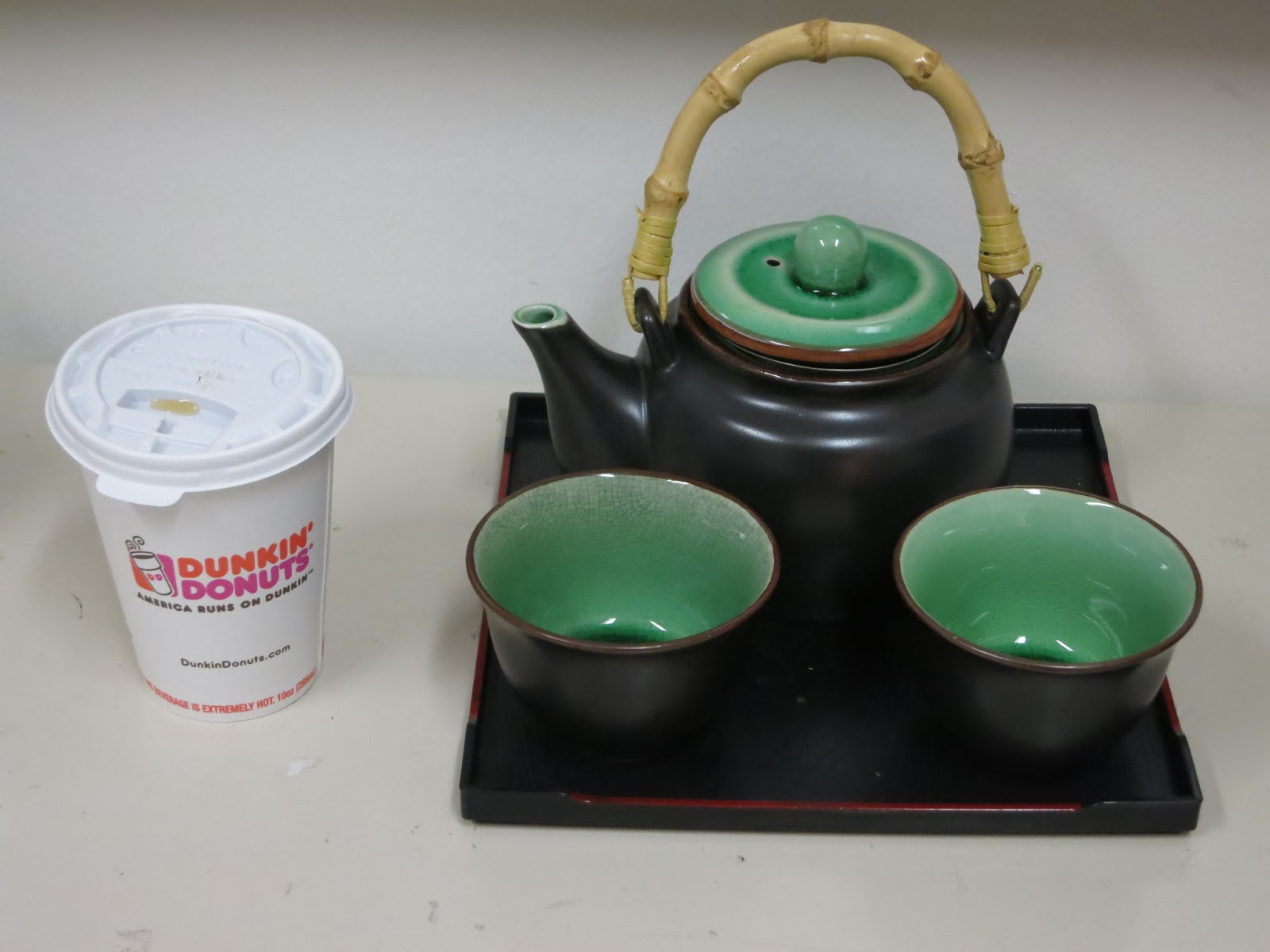
  • Waiting for water to boil. I use an electric boiler called Zojirushi CV-DSC40 VE Hybrid Water Boiler and Warmer, which has three different temperatures for different teas. When you have that, hot water is always ready when you need it.
  • Finding the right CD and book. I converted all my music so that I could store it on my phone. I also use a Kindle.
  • Cleaning and organizing things. I reduced the amount of stuff in my house, so I don’t have to clean as much. 
  • Cooking and eating at restaurants. I cook more easy, healthy dishes and occasionally I go to a nearby restaurant (that doesn’t have long lines!) I also use an automatic rice maker called the Zojirushi NS-LAC05XT Micom 3-Cup Rice Cooker and Warmer
  • Running fewer errands. I generally create a plan and run all my errands in one trip. One example is checking my mail once a week rather than every day.


3. Follow my father’s advice!
My father held a PhD in mathematics and taught university level math. For this reason, I’ve always trusted his sense of time efficiency. His top three suggestions (from what I remember) are:
  • Muti-task in some situations
In general, I’m not a proponent of multi-tasking. Focusing on one task at a time leads to a better outcome. However, there are exceptions. One idea is try to stand on one leg while brushing your teeth to practice balance. Another is to do tai chi breathing exercises while waiting for the bus.
  • Don't stay in bed when you are awake
I remember when I was a child, my father always told me, “When your eyes are open and you are already awake, don’t delay. Get up immediately and use your time to do something meaningful. Wasting time is a shame.” 
  • Get up early
No time for Tai Chi? My father would suggest waking one hour earlier in the morning and going to bed one hour later at night.

4. Try the 6 mini forms from The Zhang System
If you don’t have time to finish all of the 85 traditional forms, you can try the 6 mini forms that I have created, each of which has 6 new movements or less. They are conclusions, or culminations, of the traditional form without sacrificing or eliminating important moves like the simplified tai chi form. You can finish each form in a few minutes. If you only have few minutes in the morning, that will be plenty of time to fit one in!

One of the mini forms is listed below:
 The brush peacock’s tail form
1.      Preparing form
2.      Opening form
3.      Brush peacock’s tail
4.      Single Whip
5.      Cross hands
6.      Closing form

I hope this article was helpful for you to tame the “time” tiger in  Tai Chi . If so, please pass on the link to this article to help more  Tai Chi practitioners. 

2016 Copyright by Huan's Tai Chi

Wednesday, October 26, 2016

Keep the essentials in Tai Chi


Sometimes when I teach Tai Chi, the Chinese proverb “Qu Wu Cun Jing” comes to mind. In Chinese, Qu means get rid of; Wu means weeds; Cun means keep; and Jing means chives. Essentially, we should get rid of the weeds and keep the chives. Figuratively, the whole sentence means “Keep the essentials and get rid of the things which are not necessary.” 

Anytime we learn something new, we may unknowingly transfer bad habits from our daily postures, in other words, the weeds. However, many of us are not able to distinguish the weeds from the chives on our own because they look very similar. A good teacher can tell the difference and give you advice accordingly. For example, sometimes I tell my beginner students to relax their shoulders and keep their body vertical because new students are not aware that they have raised their shoulders and they are leaning forward or backward, causing bad form. In many cases, the job of the Tai Chi teacher is to help you discard such habits. The following is a list of these habits. Removing them from your form can help you develop better Tai Chi skills. 


  • Raising your shoulders
  • Raising your elbows
  • Leaning your body backwards or forwards
  • Allowing your stomach to protrude, thus not observing the proper position of the acupuncture points called dantian 
  • Tilting your shoulders while moving
  • Not transferring weight properly from one leg to the other 
  • Not placing your foot lightly on ground
  • Not turning your waist while moving
  • Moving your body up and down too much
  • Tilting your head
  • Not leaving enough space between your arms and body
  • Not coordinating the movement of your upper body and lower body 
  • Stiffening your waist
  • Using force


Find this article helpful? Please pass the link around and spread the word to more Tai Chi practitioners.

2016 Copyright by Huan's Tai Chi

Friday, July 22, 2016

It Baguazhang the Best Exercise Ever? 6 Benefits of Baguazhang Walking over Brisk Walking

Swimming, Tai Chi, Walking, Strength training, and Kegel exercises are listed as five of the best exercises you can do by Harvard Medical School’s Healthbeat report. The Authors probably do not know about a Chinese martial art called Baguazhang which concentrates on circular walking and has many benefits beyond simple Brisk Walking.

Baguazhang does not require a lot of space.

Bagua only requires a small circle to walk around. It can be done at home during bad weather outside.

Baguazhang requires precise body alignments which can reduce joint pain.
Many elderly people develop joint pain because they do not have good body alignments especially while walking. Bagua develops precise alignments while lifting and planting  feet.


Baguazhang is a total body exercise.
Bagua is a whole body exercise; you need to coordinate many different arm and waist movements with the walk. You not only exercise your legs but your whole body.

Baguazhang familiarizes you with orientation.
Bagua does both the Yang and Yin circle walking. It walks two different directions with a special tuck in step to change directions. It gives you more flexibility of walking in different directions.


Baguazhang is suitable for both young and old
You can adjust your body height while doing Bagua walk.  Normally elders walk in a higher stance while younger practitioners practice in a lower stance to help strengthen the legs more.

Mud Stance allows you to train your balance
Bagua's special Mud Stance allows holding a leg in the air for short period of time to train balancing on one leg.

For people want go beyond, you can also learn the martial arts application for Bagua. Want to try out a class to see if you will enjoy this ancient exercise from China? You can visit our studio every Saturday morning at 10am at 7 Temple Street, Cambridge MA.

2016 Copyright by Huan's Tai Chi

Tuesday, April 12, 2016

Smart learning: Practicing is not the only key to learning Tai Chi


Many of my students have commented that learning to do Tai Chi correctly is not an easy task. Some of them have learned simplified form from other teachers found difficult learning the detailed traditional 85 forms. By simply repeating what the teacher has shown you, you are not improving your skills to their fullest potential. How can we really learn form and improve our Tai Chi skills? Here are some suggestions that you could benefit from. 

Set an approachable goal
When some beginners first come to our studio, they use the instructor’s performance and other intermediate students’ performance as a model. They feel that they will perform at this level within a month or two. This seems like a reasonable goal, but looks can be deceiving!  Of course, the form of the instructor and other intermediate students required years of practice and learning.

As a beginner, your goal is not to be able to have the same form and moves as the instructor. Rather, I recommend that you learn the first few moves and do them well. Only with an approachable goal will you conquer the fear of learning and ease the pressure of not learning enough movements so that you may move forward. 

Remember, learning every skill takes effort. It may take a short time to learn some skills; for others it may take longer. Your own ability and the method used by the instructor are two important factors in determining how long it will you take to learn your form. 

The correct way
While some students don’t practice often and others practice quite a bit, the ones who practice often don’t always seem to improve their form significantly. Why is this the case?  You might think that those who practice more should have better form and more advanced skills. However, the fact is this is not true.

We know that if you want to remember something, it needs to enter your long-term memory. In order for this to happen, you first need to enter the movements in your short-term memory. Naturally, this requires practice. This is common knowledge. This logic is sound if you are doing the right movements. If your movements are not correct, then you are repeating the wrong movements and you are entering the wrong information into your short and long-term memories, thus not spending your time wisely. 

That’s why when my father was teaching private students, he didn’t want someone to go to the next step if the current move had not been mastered. In a large class, when a teacher can’t correct every detail of every student’s movements, the best approach is to try to just learn one or two movements at a time and to learn them correctly. Ask questions or just ask teacher to come correct you in person. For this reason many students also book private lessons to master some movements. 

Part vs. Whole
As I often mention in class, everyone focuses on different aspects of the instructor’s teaching. It’s like the story of “the blind men and an elephant,” in which every one thinks the part they touch is the shape of the whole elephant.  Essentially, everyone’s focus and take-aways from class are different. Most beginners will pay more attention to the instructor’s hand movements instead of body movements. However, as I often say, “Tai Chi is a whole body exercise. We want to concentrate on whole body movements instead of partial body movements.” 

Visual Vs.  Real
As I mentioned above, even students who pay attention and try to concentrate on the whole body movements might not be repeating the movements correctly. As Tai Chi is considered an internal martial art, what you appear to be may not be what is happening in reality. In Karate, an external martial art, a hand block and punch is a hand block and punch. In Tai Chi, it can be a twist of the whole body linked to your arm which rotates to form a block. Pay attention to your instructor's movements and ask questions to figure out how to make this special move. 

Steps
Steps determine the success of your learning. If you made the wrong first step, the second step could be wrong as well. For example, in Tai Chi if you haven’t transferred weight to one leg, then you can’t lift the other leg. Making sure you have the right sequence will make your Tai Chi smooth. 

Repetition
Finally, let’s return to the topic of repetition. If we take all the suggestions above into consideration, we can now talk about repetition. Practice makes perfect! That’s why I always tell my students at end of the class, “Please go home and practice!”

2016 Copyright by Huan's Tai Chi

Thursday, April 16, 2015

8 Ways to Memorize Your Tai Chi Form

Tai Chi does not just improve health; practicing and learning the forms also helps improve your memory. New students often ask me how to memorize the forms, so I share some of my experiences below.

1.   Facing of the Palms

My late father, Master Zhang Lu Ping, taught me various memory aids for placement of the palms. Consider Peng as used in Brush Peacock’s Tail; it is like holding a mirror with the palm facing in. If Peng is used with the hand facing out, you are pushing open a door. If the hand faces in, you are holding a baby. When the palm faces up, you are lifting a plate. When the palm faces down, you are bouncing a ball.


2.   Circles
There are many circles in Tai Chi form and considering them all could be complicated. I suggest you consider only two circles; clockwise and counterclockwise.

3. Stances
There are only four major stances.
-Opening Stance (Opening form)
-Bow Stance
-Horse Stance
-Empty Stance (heel OR toes on the ground)


4.   Arm Transitions: Peng and Lu ( or Ward Off and Roll Back)

If you perform Peng, you must next perform Lu. If you perform Lu, you must next perform Peng. If you open you must next close, if you close you must next open. You cannot perform Peng-Peng or Lu-Lu; it must be Peng-Lu or Lu-Peng. Understanding this will prevent mistakes and help you memorize the arm

5.   Foot Transitions: Weight Transfers

There is always a weight transition between movements. If all your weight is on one leg, it is not empty and you cannot lift it. You must transfer weight to the other leg to make the first leg empty; then you may lift the first leg. Always transfer weight between forms; from full to empty, empty to full.

6.   Associate the Movement with the Name

Whether Single Whip or White Crane Spreads its Wings, connect the form name with the moves that link it together.


7.   Use in Application

Although some students are most interested in the health benefits of Tai Chi, it is often easier to remember forms if you learn their applications. You might not want to learn how to fight, but the martial applications will help you visualize movements and memorize the forms.

8. Repeating single movements in the forms is the best way to remember.

Continued practice, learning a little at a time, will move your forms from short-term memory to long-term memory.

2015 Copyright by Huan's Tai Chi

Monday, February 23, 2015

The door to Tai Chi: Stages and Steps of Learning Tai Chi


A journey of a thousand miles begins with a single step - Lao Tzu
but how? and where should we start in the world of Tai Chi?
When I give lectures and seminars, I often hear students saying they have already learned Tai Chi or have been doing it a long time. Most of them have only reached the first or second stage of the following four stages: Xing/Shape, Sheng/Feel, Yi/Meaning, and Jue/Song. The students have not really completed all four stages.

Yang Cheng Fu (the founder of Yang style Tai Chi) wrote a book whose full title is The Complete Body and Usage Book of Yang Style Tai Chi. It is divided into two parts; one is for your own body, to understand if your body can adapt to the tai chi forms, the other is for usage, to understand how to apply the forms to others. Shape and Feel are part of the body; Meaning and Song are part of the usage.

Shape(Xing): Includes understanding the basic principles, movements and positions, and the transitions between them. Are you familiar with all of the movements and can you do them yourself? 

Feel(Sheng): Coordinating the whole body with proper weight transitions. Are you able to move smoothly and feel relaxed during each movement? Moving through the forms should ultimately be automatic, without thinking. 

Meaning(Yi): Understanding what each movement is for. What is the martial application for each movement? Are you able to apply the form for self-defense against different types of opponents?

Song(Jue): Synthesizing, understanding, and applying the written, philosophical, and martial material that prior and current Tai Chi Masters have offered. 

"In the Song Dynasty, there was a farmer who thought his crops grew too slow. He went and pulled up all the crops, just a little bit. After a day, he found all the crops were dead. This is a famous story that everyone in China knows. It tells us we have to realize our goals step-by-step, not in a hurry." 

“Follow in order and advance step-by-step; advance gradually in due order; follow in proper sequence and make steady progress.” – Zhu Xi’s (famous comment on Confucius’ book)
Here I list the steps to practice the above four stages:

Preparing and Opening Forms

Prepare your Tai Chi and understand balance while in a still position.

Brush Peacock’s Tail

Understand the four major movements of Tai Chi; Peng, Lu, Ji, and An.

Post Standing

Practice a steady form for the various stances, e.g., Horse Stance, Bow Stance, and Empty Stance.

Practicing the Steps

Practice your footwork for the various stances, e.g., Advancing Steps, Retreating Steps, and Side Steps.

Practicing Single Form

Practice the major forms individually, e.g., Single Whip, Knee Brush, Waving Hands Like Clouds, and Jade Lady Moves the Shuttles.

Practicing Whole Form

Go through the whole form smoothly.

Push Hands, Basic Forms - Steady

Understand the basic forms of push hands while not moving your feet.

Push Hands, Basic Forms - Walking

Understand the basic forms of push hands while walking.

Push Hands - Feeding and Understanding Energy

Learn to identify your own energy as well as the energy of a partner.

Push Hands - Applying the Forms You Have Learned

Apply the Tai Chi forms you have learned in during push hands.

Applying Each Form

Understand how to apply each form not just during formal push hands, but in informal martial arts applications.
Above I offered steps to help you understand how to practice and learn your Tai Chi.  Kang Jin Zi, from the Yuan Dynasty, had a famous saying called “Tiger’s head with snake’s tail.” It means “In like a lion, out like a lamb.” Now you have a guide I have mentioned above to start your first step to the door of Tai Chi, will you able to continue and last yourself to the end and complete the journey?

2015 Copyright by Huan's Tai Chi

Monday, May 19, 2014

Tai Chi – The Best Exercise to Make Friends

While Tai Chi can certainly be practiced in solitude, it also contains a special exercise performed in pairs called “pushing hands.”  This routine involves two people, each with unique movements in a circle while interacting with another person at the same time. Tai Chi practitioners use pushing hands to work on their form and improve their overall understanding of Tai Chi. Here are some benefits:
1. Pushing hands promotes a healthier lifestyle because it encourages people to go out and enjoy this natural exercise with friends.  They breathe, stretch, and enjoy the sequence and rhythm of the movements. Afterwards, they feel satisfied and build stronger friendships through mutual help.
2. People who do pushing hands have a positive attitude because they know they will improve and grow every day within the form. As I tell my students, “Even the slightest improvement should be a motivation to continue your Tai Chi.”
3. They are also better team players because they work in pairs and enjoy helping each other to understand the form and movements.
4. Pushing hands promotes moving with careful consideration and sensitivity. With slow and light movements, participants improve their listening power as they tune in to their partners’ movements.
5. This exercise helps improve balance and encourages interaction with others. Someone may have good balance individually, but it can be thrown off when that person is suddenly pushed by someone else.  Pushing hands teaches us to relax in this situation rather than panic. It’s a great way to root our feet to the ground and strengthen our posture in order to keep our balance.
6. People who do pushing hands build trust and form stronger friendships. A person who has mastered this exercise won’t want to be alone all the time or be a couch potato. With time, the partners will practice more and more, thus building trust. 
No wonder Tai Chi is called the “supreme ultimate” exercise (literal translation from Chinese.)

2014 Copyright by Huan's Tai Chi

Tuesday, February 25, 2014

Tai Chi Improves human body by applying The Law of Use and Disuse


The French scientist Jean-Baptiste de Lamarck (1744-1829) is famous for one of his laws which summarizes his evolutionary thought. It’s called the The Law of Use and Disuse - The parts of an organism's body that are used become more developed; parts that are not used become smaller and may disappear. Charles Darwin (1809-1882) made extensive use of this special Lamarck's law.

I found many things I benefited from Tai Chi may not happen to any regular person. I used them often. I gain it to let it become part of my life. With people who never do it, they may lose the ability to do so. Here are some examples:

1. Walk backwards and sideways
Without learning the movements repulse monkey and waving hands like moving clouds, you will probably never walk backward and sideways as easily. You will also lose this ability as you grow older. When you need it in a sudden situation, you could easily fall.

2. Open and relax your shoulder
Regular exercise such as lifting weights won't train you to open shoulder joints such as “Jian Jin”( The well of shoulder) acupuncture point. With Jian Jin opened, you will have less shoulder pain and less tight shoulders as you get older.

3. Quiet down at the beginning
In modern lifestyle, people tend to catch one thing after another and have a “Go, go, go” lifestyle. Tai Chi teaches you to quiet down and relax at first before you take a task. This is one thing I benefit most from Tai Chi.

4. Elbow and Knee move together
With your elbow and knee moving together, your body parts are supporting each other. It makes you move with ease. Without doing Tai Chi, it's hard for you to understand how body parts coordinate with each other.

5. Take a deep breathe
Herbert Benson MD from Mass General Hospital mentioned that when you breathe deeply, the air coming in through your nose fully fills your lungs, and you will notice that your lower belly rises. The ability to breathe so deeply and powerfully is not limited to a select few. This skill is inborn but often lies dormant. Reawakening it allows you to tap one of your body’s strongest self-healing mechanisms.(Harvard Health Publications in consultation with Herbert Benson, M.D.)

If you are always in hurry, your breathe are not deep enough. While doing slow movements in Tai Chi , it will enhance your breathe to a better deep breathe. A deep  breathe involves relaxation, quietness, with slow and gentle approach, and continues with concentration and many other techniques while doing Tai Chi. 

Use or disuse? They are all in Tai Chi.


------------------
If you like this article, you may also want to read Lao Tzu's Secret to Extend your Life
 
Copyright Huan's Tai Chi 2014


Monday, December 30, 2013

Welcome 2014 and a New Beginning


Life is short! Plan your time wisely and see if you have accomplished your goals by the end of each year. If you have a dream or something that you always wanted to get done, you want to try to get it done sooner rather than later. Things can change if you don’t get it done today. I always wanted to visit Master Ma Hong (He was a tenth generation descendant of Chen Style Tai Chi Chuan and a classmate of three of my grandmasters). Just as I was telling one of my private students a few weeks ago that I am planning to visit him in 2014, Master Ma passed away on December 22, 2013. Master Ma was a kind hearted old man. People said that he always replied to every letter that was sent to him. He was very patient while teaching his Chen Style Tai Chi. His writings on the new frame of Chen Style Tai Chi are also very detailed and informative. He made a big contribution to the Tai Chi society. He had sent many Chen Style Tai Chi materials to me and my father, which we really appreciated. Master Ma, may you rest in peace.

Zengzi, one of the top students of Confucius, encouraged people to have a conclusion of their day and check if the time of their day has been well spent and if they are productive.  As I mentioned above, I believe we should do the same for our year as well.

Looking back at some of the major events that happened in my life in 2013, I feel that my 2013 was well spent while I also need to make some adjustments for the next year.

1. Huan’s Tai Chi and I have done a bunch for our School and community. I have visited my grandmaster, Cai Feng Xiang in Shanghai and my Yang Style Tai Chi teacher Master Xie Bing Can. Huan’s Tai Chi moved to our own studio within the Cambridge YWCA in February, and we got our own entrance and key in July. We had A Winter Evening of Chinese Dance & Martial Arts: Traditional & Contemporary Movement, Performance & Class, Watch & Learn in coordination with Chu Ling Dance Academy in December. In September, we started a new beginner level 2 class in University of Massachusetts Boston and MIT has finally approved our student Cathy's proposal to lead the creation of the new MIT Kung Fu and Tai Chi club which is taught by Huan’s Tai Chi 's staff. In the summer, we taught our Summer Park Tai Chi class again in Backbay, performed demonstrations for Green Fest, and gave a lecture at Spectacle Island Boston. I also made my first video of Yang Style Tai Chi to post online to benefit my students. I want to thank Dave Watts, Yael Marshall and the other Huan’s Tai Chi staff members for helping to accomplish some of the efforts above. I also want to thank Marie for organizing the summer park Tai Chi to benefit the local seniors.

2. I have spent more time with family and friends.
I also visited a lot of family and friends in a trip to China in January. I no longer feel bad for not seeing them for so long. I also went to two friends' weddings in February and September. I met a lot of close friends individually in October. I did try to squeeze enough time to see my godson as much as possible. I would like to thank all of them for staying good friends and warm family members even though I don’t see some of them often.

3. I traveled to many places which I was eager to see.
In March, I visited New Orleans, the hometown of one of my favorite singers, Louis Armstrong. I also went to Bobsled in Olympic Style and ski at a White Face mountain, where I always wanted to go. In May,  I visited Smokey Mountain and Shenadoah National Park.  In June, I visited Mount Rushmore, Yellow Stone park, and Arches National Park.  I then made my 6th trip of the year to Alaska.  

4. Stay with a natural and peaceful life.
In August, I got offered a piece of land in Somerville community garden after 2 years of waiting period. I did a lot of gardening.   In October, I traveled to New Mexico to experience the green living life in Earthship and volunteered to setup a hot air balloon at Albuquerque’s hot air balloon festival upon a friend’s suggestion.  In November, I made my 8th and last trip of the year. I escaped the cold and visited St Thomas and St John, went kayaking for hours to an island and learned about the environment on the island. I also begin to present Chinese tea ceremony at my Tai Chi studio for another way to relax and calm people’s life.

Life is short. Being healthy and close to family and friends and close to nature will fulfill your life. Here I concluded my year of 2013 and I wish and plan to have an even better 2014. Happy New Year everyone! I hope all your wishes come true and that you will have a healthy, relaxed year filled with joy and spent with your family and friends!


Copyright Huan's Tai Chi 2013

Monday, May 13, 2013

My 1st Tai Chi video: 1 set of Yang Style Tai Chi

 
Finally, I did the first 13 movements of Yang Style Tai Chi on video clip. Hope it will help some of our students to remember the movements and also for our blog readers whom are curious about Tai Chi. Enjoy! P.S. I will try to get some applications of the movements up on my blog/youtube in the near future.

Thursday, April 11, 2013

5 Chinese Daily Habits That May Extend Your Life


As many of you may know, I was in China over the New Year to attend my grandfather’s funeral. Every time I travel, I always try to learn some of the benefits of a particular culture and try to bring them into my life, so I can appreciate the culture of the place where I have just been and perhaps my friends and students here in US can benefit as well.  This time, I realized that many Chinese daily life habits could really benefit us in the western world.


How do people’s lives in China differ from those of Americans? Here is a daily routine schedule that compares a typical Chinese and American daily routine. (Of course, this schedule may differ from individual to individual, but I think it is a fair example.)

US
China
Morning
Get up at 7:00, woken by alarm clock
Get up at 6:00, naturally
Take shower. Eat cereal or quick breakfast and take the train or drive to work, or stop for a fast breakfast on the way (maybe Dunkin' Donuts or Starbucks). Drink lots of coffee.
Quickly wash face with warm water. Do Tai Chi or other exercises in the public park. Cook breakfast or buy street food. Go to work. Drink tea.
Noon
Eat a quick lunch, maybe take-out or fast food, perhaps sitting at desk (one-hour lunch break)
Go home to eat with family and take a nap (two-hour lunch break)
Afternoon
Back to work right away. Work until 6:00 or 7:00.
Back to work after nap. Work until 5:00 or 6:00.
Evening
Go to the gym after work
Cook at home or go to a restaurant. Dinner around 6:00
Cook at home or go to a restaurant. Dinner around 8:00
Engage in relaxing activities such as watching TV or having tea.
Night
Engage in relaxing activities such as watching TV. Go to bed around 11:00.
Take shower and go to bed around 9:30.


If we compare these two schedules, we see some major differences in lifestyle.  Even though many American habits have become part of some Chinese people’s lives, especially in big cities where people tend to be more Americanized, most Chinese still adhere to the five major habits below.


1.   Time habit: Get up early, go to bed early


“Hear the rooster, it’s time to dance!” This traditional Chinese idiom that almost every Chinese person knows originated from the Western Jin dynasty. Five thousand years of history have taught Chinese people to get up early.  The Chinese believe that after an entire night of breathing indoors, the oxygen level in the bedroom becomes very low.  It’s essential to get out of the house as soon as possible to breathe some natural air. The air quality is considered to be the best in the early morning since there is less traffic and human activity at night, and less dust in the air. It’s healthier to walk outside, exercise and breathe fresh air in the early morning. Once the city starts moving, dust, and the noise level, will go up, making it hard to concentrate and do exercise.


Depression and high stress levels can shorten one’s lifespan.  Many studies have been done on the people of Okinawa, Japan, who are known to enjoy both the world's longest life expectancy and the world's longest health expectancy. They found that the people of Okinawa have surprisingly low depression and stress levels, as a result of their relaxing lifestyle that includes low-impact exercise, such as Tai Chi, and supportive bonds within the community. Most Chinese people live close to their workplaces.  When they get up early, they have enough time to enjoy their morning and get to work without feeling rushed. They don’t start their days off with stress. As I often mention to my Tai Chi students, a good starting stance leads to a good form. Similarly, a relaxed morning can lead to a positive day.


Before Edison invented the first electric light bulb, people tended to go to bed early because candles were costly; thus it was natural for people to go to bed early. The Chinese are very good at following this natural way. Most (perhaps not all) Chinese avoid socializing or drinking too much late at night to avoid a headache in the morning.  An early bedtime will result in a natural rise in the morning without an alarm clock.


2.       Exercise habit: Do exercises such as Tai Chi in the morning


As I mentioned, the people of Okinawa regularly practice Tai Chi as a healthy habit in order to live longer. Tai Chi is a traditional exercise that originates in China and people usually do it in the early morning.  If you go to bed early, you have a long, relaxed night to rest your body. Morning is the best time to exercise. Plenty of oxygen and clean, low-dust air are very beneficial for an exercise that involves slower breathing. Some Americans like to go to gym in the evening, before or after dinner.  Recent studies have shown that exercising while your body is low on food may be a good way to trim excess fat. Working out in the morning is therefore a better choice, even for vigorous, fat-burning exercises.


3.       Rest habit: Take a nap
As we can see, most Chinese take a nap in the middle of the day. Recently, I read a Chinese news article that stated that many Chinese who recently moved to the US and started work can’t stand the habit of not having a noon nap. To remedy their situation, many try to go to bathroom and take a nap while sitting on the toilet. Napping on the toilet may sound very extreme, but I have to say, napping is one of the best Chinese habits.  Ever since ancient times, the Chinese have had this habit of napping at noontime.  It is built into the Chinese schedule, which is why the Chinese have a two-hour lunch break,  compared to Americans’ one-hour lunch time. Sarah Medneck, author of  Take a Nap! Change Your Life, mentions that taking a nap “… increases alertness, boosts creativity, reduces stress, improves perception, stamina, motor skills, and accuracy, enhances your sex life, helps you make better decisions, keeps you looking younger, aids in weight loss, reduces the risk of heart attack, elevates your mood, and strengthens memory…” So I ask my fellow Americans, why are we not napping?

4.       Eating habits: The importance of food


In China, people think breakfast is very important, so they try to eat plenty, enough to fill their stomachs. It also considered important to eat breakfast slowly by getting up early, so you have enough time to eat and then go to work. Eating quickly makes it difficult for your stomach to absorb food.   The Chinese usually meet with family at noontime, and they want make sure this is the best meal of the day.  For dinner, the Chinese try to eat less because they don’t want put too much pressure on the stomach before going to sleep. They want the stomach to rest at night. In the US, we usually eat in hurry in the morning, we eat a smaller, faster lunch, and our meal with our family is usually dinner, which is often too large, and we often eat it too close to bedtime.


5.       Shower habit: Shower at night
I once read a funny article about how to determine whether you are a “real” Chinese or an “Americanized” Chinese based on some of your habits.  One habit is whether you take a shower in the morning or at night. Showering before bed is another good habit that the Chinese have.  Night showers save you time in the morning to have a leisurely breakfast and get to work without feeling rushed. They also relax your body and permit a better night’s sleep.  After a warm shower, the body’s temperature drops, which signals your body that it’s time to rest, and slows down essential metabolic functions including heart rate, breathing, and digestion. Perhaps that’s why we give babies a bath at bedtime to calm them and help induce sleep.
Will adopting these habits make you a Chinesized American?  I don’t know, but try them out and see if you enjoy the benefits!

------------------
If you like this article, you may also want to read Lao Tzu's Secret to Extend your Life
Copyright Huan's Tai Chi 2013