Showing posts with label Ancient Wisdom. Show all posts

Tuesday, February 25, 2014

Tai Chi Improves human body by applying The Law of Use and Disuse


The French scientist Jean-Baptiste de Lamarck (1744-1829) is famous for one of his laws which summarizes his evolutionary thought. It’s called the The Law of Use and Disuse - The parts of an organism's body that are used become more developed; parts that are not used become smaller and may disappear. Charles Darwin (1809-1882) made extensive use of this special Lamarck's law.

I found many things I benefited from Tai Chi may not happen to any regular person. I used them often. I gain it to let it become part of my life. With people who never do it, they may lose the ability to do so. Here are some examples:

1. Walk backwards and sideways
Without learning the movements repulse monkey and waving hands like moving clouds, you will probably never walk backward and sideways as easily. You will also lose this ability as you grow older. When you need it in a sudden situation, you could easily fall.

2. Open and relax your shoulder
Regular exercise such as lifting weights won't train you to open shoulder joints such as “Jian Jin”( The well of shoulder) acupuncture point. With Jian Jin opened, you will have less shoulder pain and less tight shoulders as you get older.

3. Quiet down at the beginning
In modern lifestyle, people tend to catch one thing after another and have a “Go, go, go” lifestyle. Tai Chi teaches you to quiet down and relax at first before you take a task. This is one thing I benefit most from Tai Chi.

4. Elbow and Knee move together
With your elbow and knee moving together, your body parts are supporting each other. It makes you move with ease. Without doing Tai Chi, it's hard for you to understand how body parts coordinate with each other.

5. Take a deep breathe
Herbert Benson MD from Mass General Hospital mentioned that when you breathe deeply, the air coming in through your nose fully fills your lungs, and you will notice that your lower belly rises. The ability to breathe so deeply and powerfully is not limited to a select few. This skill is inborn but often lies dormant. Reawakening it allows you to tap one of your body’s strongest self-healing mechanisms.(Harvard Health Publications in consultation with Herbert Benson, M.D.)

If you are always in hurry, your breathe are not deep enough. While doing slow movements in Tai Chi , it will enhance your breathe to a better deep breathe. A deep  breathe involves relaxation, quietness, with slow and gentle approach, and continues with concentration and many other techniques while doing Tai Chi. 

Use or disuse? They are all in Tai Chi.


------------------
If you like this article, you may also want to read Lao Tzu's Secret to Extend your Life
 
Copyright Huan's Tai Chi 2014


Thursday, April 11, 2013

5 Chinese Daily Habits That May Extend Your Life


As many of you may know, I was in China over the New Year to attend my grandfather’s funeral. Every time I travel, I always try to learn some of the benefits of a particular culture and try to bring them into my life, so I can appreciate the culture of the place where I have just been and perhaps my friends and students here in US can benefit as well.  This time, I realized that many Chinese daily life habits could really benefit us in the western world.


How do people’s lives in China differ from those of Americans? Here is a daily routine schedule that compares a typical Chinese and American daily routine. (Of course, this schedule may differ from individual to individual, but I think it is a fair example.)

US
China
Morning
Get up at 7:00, woken by alarm clock
Get up at 6:00, naturally
Take shower. Eat cereal or quick breakfast and take the train or drive to work, or stop for a fast breakfast on the way (maybe Dunkin' Donuts or Starbucks). Drink lots of coffee.
Quickly wash face with warm water. Do Tai Chi or other exercises in the public park. Cook breakfast or buy street food. Go to work. Drink tea.
Noon
Eat a quick lunch, maybe take-out or fast food, perhaps sitting at desk (one-hour lunch break)
Go home to eat with family and take a nap (two-hour lunch break)
Afternoon
Back to work right away. Work until 6:00 or 7:00.
Back to work after nap. Work until 5:00 or 6:00.
Evening
Go to the gym after work
Cook at home or go to a restaurant. Dinner around 6:00
Cook at home or go to a restaurant. Dinner around 8:00
Engage in relaxing activities such as watching TV or having tea.
Night
Engage in relaxing activities such as watching TV. Go to bed around 11:00.
Take shower and go to bed around 9:30.


If we compare these two schedules, we see some major differences in lifestyle.  Even though many American habits have become part of some Chinese people’s lives, especially in big cities where people tend to be more Americanized, most Chinese still adhere to the five major habits below.


1.   Time habit: Get up early, go to bed early


“Hear the rooster, it’s time to dance!” This traditional Chinese idiom that almost every Chinese person knows originated from the Western Jin dynasty. Five thousand years of history have taught Chinese people to get up early.  The Chinese believe that after an entire night of breathing indoors, the oxygen level in the bedroom becomes very low.  It’s essential to get out of the house as soon as possible to breathe some natural air. The air quality is considered to be the best in the early morning since there is less traffic and human activity at night, and less dust in the air. It’s healthier to walk outside, exercise and breathe fresh air in the early morning. Once the city starts moving, dust, and the noise level, will go up, making it hard to concentrate and do exercise.


Depression and high stress levels can shorten one’s lifespan.  Many studies have been done on the people of Okinawa, Japan, who are known to enjoy both the world's longest life expectancy and the world's longest health expectancy. They found that the people of Okinawa have surprisingly low depression and stress levels, as a result of their relaxing lifestyle that includes low-impact exercise, such as Tai Chi, and supportive bonds within the community. Most Chinese people live close to their workplaces.  When they get up early, they have enough time to enjoy their morning and get to work without feeling rushed. They don’t start their days off with stress. As I often mention to my Tai Chi students, a good starting stance leads to a good form. Similarly, a relaxed morning can lead to a positive day.


Before Edison invented the first electric light bulb, people tended to go to bed early because candles were costly; thus it was natural for people to go to bed early. The Chinese are very good at following this natural way. Most (perhaps not all) Chinese avoid socializing or drinking too much late at night to avoid a headache in the morning.  An early bedtime will result in a natural rise in the morning without an alarm clock.


2.       Exercise habit: Do exercises such as Tai Chi in the morning


As I mentioned, the people of Okinawa regularly practice Tai Chi as a healthy habit in order to live longer. Tai Chi is a traditional exercise that originates in China and people usually do it in the early morning.  If you go to bed early, you have a long, relaxed night to rest your body. Morning is the best time to exercise. Plenty of oxygen and clean, low-dust air are very beneficial for an exercise that involves slower breathing. Some Americans like to go to gym in the evening, before or after dinner.  Recent studies have shown that exercising while your body is low on food may be a good way to trim excess fat. Working out in the morning is therefore a better choice, even for vigorous, fat-burning exercises.


3.       Rest habit: Take a nap
As we can see, most Chinese take a nap in the middle of the day. Recently, I read a Chinese news article that stated that many Chinese who recently moved to the US and started work can’t stand the habit of not having a noon nap. To remedy their situation, many try to go to bathroom and take a nap while sitting on the toilet. Napping on the toilet may sound very extreme, but I have to say, napping is one of the best Chinese habits.  Ever since ancient times, the Chinese have had this habit of napping at noontime.  It is built into the Chinese schedule, which is why the Chinese have a two-hour lunch break,  compared to Americans’ one-hour lunch time. Sarah Medneck, author of  Take a Nap! Change Your Life, mentions that taking a nap “… increases alertness, boosts creativity, reduces stress, improves perception, stamina, motor skills, and accuracy, enhances your sex life, helps you make better decisions, keeps you looking younger, aids in weight loss, reduces the risk of heart attack, elevates your mood, and strengthens memory…” So I ask my fellow Americans, why are we not napping?

4.       Eating habits: The importance of food


In China, people think breakfast is very important, so they try to eat plenty, enough to fill their stomachs. It also considered important to eat breakfast slowly by getting up early, so you have enough time to eat and then go to work. Eating quickly makes it difficult for your stomach to absorb food.   The Chinese usually meet with family at noontime, and they want make sure this is the best meal of the day.  For dinner, the Chinese try to eat less because they don’t want put too much pressure on the stomach before going to sleep. They want the stomach to rest at night. In the US, we usually eat in hurry in the morning, we eat a smaller, faster lunch, and our meal with our family is usually dinner, which is often too large, and we often eat it too close to bedtime.


5.       Shower habit: Shower at night
I once read a funny article about how to determine whether you are a “real” Chinese or an “Americanized” Chinese based on some of your habits.  One habit is whether you take a shower in the morning or at night. Showering before bed is another good habit that the Chinese have.  Night showers save you time in the morning to have a leisurely breakfast and get to work without feeling rushed. They also relax your body and permit a better night’s sleep.  After a warm shower, the body’s temperature drops, which signals your body that it’s time to rest, and slows down essential metabolic functions including heart rate, breathing, and digestion. Perhaps that’s why we give babies a bath at bedtime to calm them and help induce sleep.
Will adopting these habits make you a Chinesized American?  I don’t know, but try them out and see if you enjoy the benefits!

------------------
If you like this article, you may also want to read Lao Tzu's Secret to Extend your Life
Copyright Huan's Tai Chi 2013

Friday, January 25, 2013

Progress in Tea, and Tai Chi

I have been traveling these last few months which is why I took a short break from my blog.

After the New Year, I was in Shanghai visiting my friends, family and my Tai Chi grandmaster. One of my elementary school classmates has been very successful in business. He retired in his early 30’s and opened a small private tea shop just for treating his friends and business partners. He told me to make time for a half day because he wanted to invite me for tea with few other friends.

“Half a day? Do we really need half a day?” I asked.
“You will see,” he smiled. “I have invited a very famous tea master from Beijing to show you a tea ceremony.”

The tea shop is located in a small alley in the Xuhui District, a very quiet place tucked away inside the big city of Shanghai. After opening the door, I saw a nice garden with many green plants and little stepping stones shaped to look like lotus leaves. After entering the tea room, I saw a special display shelf with a collection of different kinds of tea pots. My friends and I then sat down next to a very traditional red wood table made just for making tea.

The tea master was there. He looks very young, but he is famous in China and has extensive knowledge of different kinds of tea. We started with white tea, then green tea, then Oolong tea, then tea made with smoked wood, then black tea. We even tried some very special handmade tea of which only eight bags exist in all of China, and whose maker recently passed away.
Warming the cups, distributing the tea, waiting for the water to boil at the right temperature, introducing the tea, smelling the tea when it’s dry, making the tea, sipping it, tasting it, smelling the tea in the cup, discussing the tea, noticing the difference between two teas, and pairing light cookies with the different teas; these are all things that must be done slowly. No wonder it took half a day to taste them!

I felt very relaxed during this whole afternoon, even without doing Tai Chi! Even though we felt we had a relaxed and lazy day, we learned a lot of tea history, and found quietness in such a busy city.

Confucius tells us “the more you hurry, the less progress you are going to make.” When we are not in a hurry, we make a lot of progress. In tea, and in Tai Chi.

Copyright Huan's Tai Chi 2013

Monday, June 11, 2012

Lao Tzu’s Secret Passage of Relaxation

The softest substance of the world
Goes through the hardest.
That-which-is-without-form penetrates that-which-has-no-crevice;
Through this I know the benefit of taking no action.
The teaching without words
And the benefit of taking no action
Are without comparison in the universe.

The Tao Te Ching by Lao Tzu
Translated by Lin Yutang

It’s normal not to be relaxed
Relaxation is not a normal state. We are trained to use force to do everything in our daily lives. We use force every day, from pushing a door, lifting a chair, stepping up stairs, or grabbing a handrail while taking the train. These actions tighten our shoulders, knees, and our whole body. Because we are not used to being in a relaxed state, it is often hard for beginners to relax easily in a Tai Chi class.

Methods of relaxation
When talking about relaxation, your teacher might tell you to relax your shoulder, elbow, or even your mind. But how do we know when we are really relaxed? How do we measure that?
When you go shopping with your friends, you can often feel tension in your shoulders if you are carrying many shopping bags. But once you put these shopping bags down, you feel your shoulders relaxing. When your shoulders feel relaxed, they sink down. Here, sinking is a measure of relaxation.

When you are sitting in a tight seat in an airplane, you may bend your knees and feel tight. But after your neighbor gets up to use the lavatory and you extend your legs, you feel your knees relaxing. In this case, stretching and extension is a measure of relaxation.

When you are stressed with too many things on your to-do list and in on your mind, you may go to the park, and watch the swans swimming in the pond. In this moment, you feel relaxed. Your mind quiets down and for this moment, you can focus on the swans, and your mind lets go of the million other things you were worrying about. This ability to let go, even for a few moments, is a measure of relaxation.

Taking no action
Sinking, stretching, and quieting your mind are some methods to relax.  Despite their differences, they can all be described in one phrase, “taking no action.” When you’re not lifting shopping bags, you are relaxed. When you’re not trying to make space for others in a tight airplane, you are relaxed. When you’re not thinking about the million things you have to do, you are relaxed.

When you were a little baby, you didn’t have to lift bags, make space for others, or think about the million things you have to do. You were relaxed and soft. You learned to un-relax once you grew older. Society taught you how to do more, think more, and become more civilized. That’s why Daoists like to stay in the mountains far from civilization, so they don’t have to deal with tons of things. They can lead simple lives. Lao Tzu believed that taking no action is the key to relaxation.

Taking no action in Tai Chi

Use less effort
Sometimes I see a younger man doing Tai Chi who is more stiff than the oldest man in the class. Because this young man has a lot of energy, he really tries to forcefully lift his legs and move his arms. Meanwhile, the older man doesn’t have as much energy, so he uses the minimum effort to lift his legs and move his arms. He is more relaxed than the younger man. That’s the benefit of less effort which is close to the meaning of taking no action.

Keep the structure
When you’re practicing Tai Chi, keep in mind that when you relax one body part too much, it might create tightness in another body part. For example, when you drop down your head to relax it, your neck is bent and stiff. As my father, Master Zhang Lu Ping said, “be relaxed, but relaxed with structure.” Without a good structure, you can’t relax your whole body. For an example of a good structure of the body, check out my blog article, “13 Points To Relax Your Body.”

Connect the whole body
How should your body should feel when it’s totally relaxed? When you try to relax your shoulder, you should feel it sinking down to the ground. If that happens, it means your whole body is connected and relaxed. To minimize the effort, as Lao Tzu suggested, you need to connect your whole body. Once one part of body makes a move, other parts follow. By connecting the body and letting the parts work together, you won’t end up using only one muscle, which can create tension. For a more detailed explanation of how to relax with the whole body, including parts and joints, check out my blog article, “Understanding the  8 Sections and 9 Joints.”

You have spent so much time of your life learning to un-relax. Now it’s time to learn how to take no action. Imagine you could be that same baby you were in your childhood: soft, balanced, free from worry, relaxed, and young. That’s Lao Tzu’s way of relaxation. He called it “化繁为简, 返璞归真: transforming the complicated to simple is to regain one’s true self.”

Copyright Huan's Tai Chi 2012

Wednesday, May 2, 2012

City Life and Tai Chi: Friends and Foes for Life

Let us rise up and be thankful, for if we didn't learn a lot today, at least we learned a little, and if we didn't learn a little, at least we didn't get sick, and if we got sick, at least we didn't die; so, let us all be thankful. - Buddha

Attitude is a little thing that makes a big difference. - Winston Churchill

In contemporary life, we like to have everything fast. Getting quick information right from your smartphone, eating fast food, and going from one event to another while thinking about the next event, is a way of life for many busy city people. Tai Chi requires the opposite mindset. Quit thinking and quiet your mind. Slow down and relax. Separate yourself from your busy life for a while.

In traditional Chinese philosophy, life balancing requires mixing yin and yang. If you do something too much, you will get hurt. Instead, you should incorporate some of its opposite to balance. For example, if you eat too much meat, it will hurt your health. You need to eat some vegetables to balance. If your life is always on the go and tense and with stress then you need to spend some time stopping, slowing down, and relaxing. That’s the way to balance your body and soul.

A good attitude is a good friend for beginner students. For many of our beginner students, seeing progress is very important for them. Many of them are in a hurry and need to see the progress quickly. However, a focus on quick results goes against the purpose of Tai Chi. In fact, often the more hurried you are, the slower your progress. If you haven’t taken the time to understand and get familiar with the current Tai Chi movement and are in a hurry to move to the next one, you may end up learning a bunch of movements, but none of them are right or good enough. As I often tell my beginner class, you can’t eat a lot of food and become fat in one night. Tai Chi is just like gaining or losing weight; it takes slow progress at beginning.

As we have mentioned, learning Tai Chi is also a way to practice patience. We do each movement slowly to feel the relaxation. Traditionally, it takes weeks to just learn one movement in detail. But on the contrary, every time you learn one movement completely and correctly, it will help you learn the next movement more quickly, because they share similar fundamental theories. Having a good attitude, believing in yourself, and learning and taking things slowly are the keys to improving your Tai Chi.

To help you learn efficiently, I suggest the 3Rs: Review, Repeat, and Review Again. To review, read our online notes before the upcoming class to know what will we be teaching in the class. Once you get home, repeat and review the movements you learned in class. To review again, I also suggest you to read my blog post on “How to Better Remember your Tai Chi Moves.

Distraction is a common foe of Tai Chi beginners. Research shows that doing more than one thing at a time has a negative effect on memory and learning and is a major cause of premature aging. Doing Tai Chi requires concentration which will help you relax while doing one thing at a time. Getting distracted by other matters while doing Tai Chi defeats the purpose of Tai Chi. That’s why I tell my students, when you are doing Tai Chi, you shouldn’t have anything else in mind but Tai Chi. You shouldn’t even think about the next or past Tai Chi movement while you are doing the current movement. Happiness comes from enjoying the current moment. If you want to feel relaxed and happy while enjoying Tai Chi, concentrate on the current movement in the current moment.

Copyright Huan's Tai Chi 2012

Monday, February 13, 2012

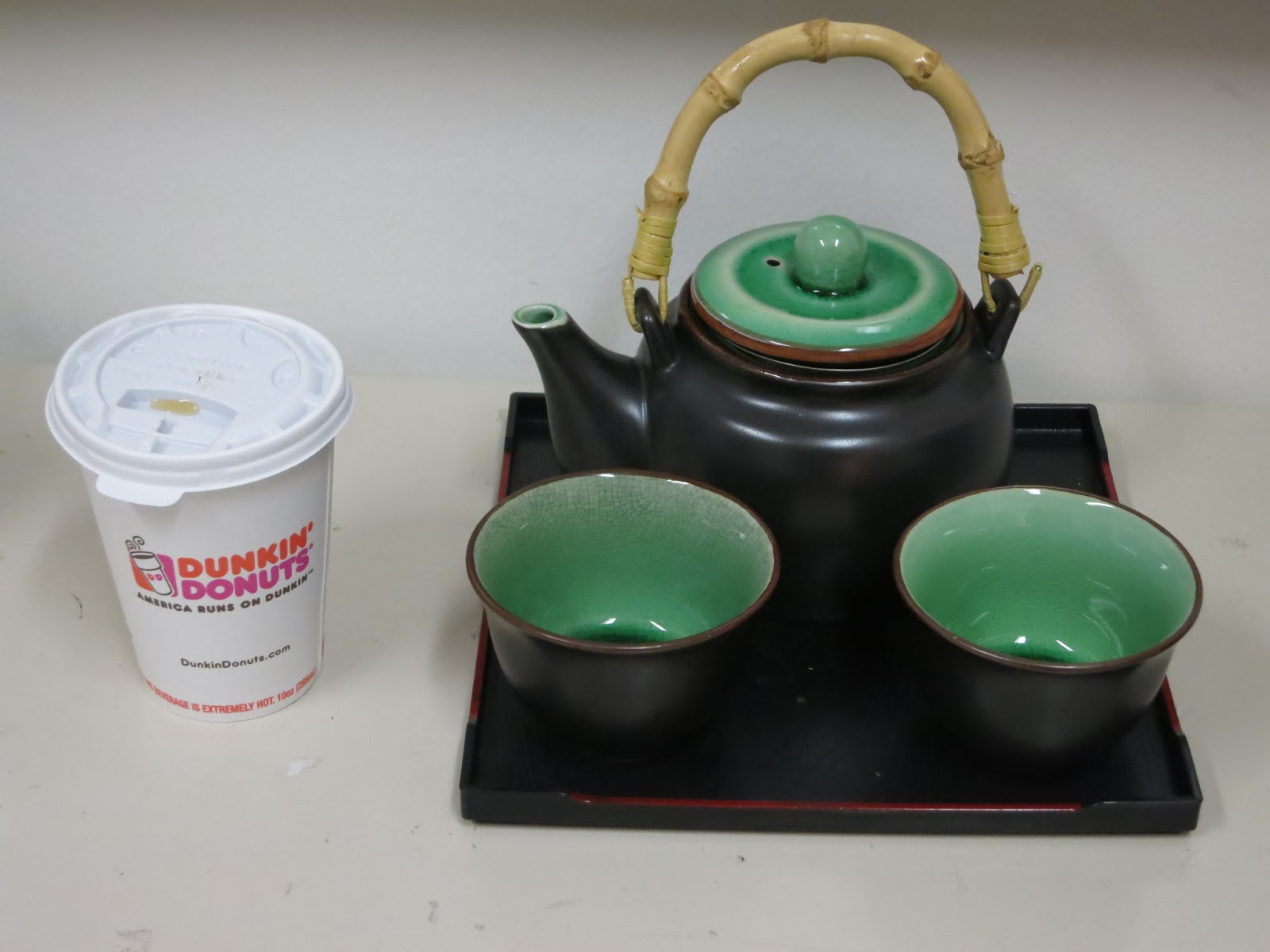
A Healthier Life with Tea

The Qing Emperor Qianlong ruled China for 60 years from 1735 to 1796. At 85 years old, he finally expressed that he had enough and needed to retire from being emperor.

One of his officials said to him, “We cannot have a country without an emperor for even one day!” Emperor Qianlong lifted a cup of tea and said, “Jun [emperor] cannot live without tea for even one day.”

Qianlong had few favorite teas such as Iron Kwan Yin (a half green, half black tea), Silver Needle of the Gentleman Mountain (a yellow/white tea) and Dragon Well (a green tea).

I, too, enjoy these same teas today. Here is my advice on how to enjoy tea as part of your daily routine.

Rise up early in the morning. It’s nice to drink cup of fragrant tea to refresh your mouth. It will lift your spirit, and arouse the appetite. Having some snacks or breakfast after the tea is then indeed a pleasure. I usually drink Iron Kwan Yin or other type of oolong1 tea in the morning. It’s bit stronger than most green teas but not as strong as black tea, so it’s best for me in the morning to help me stay awake and start the day.

In the afternoon, if I have exerted myself and feel the need for another lift, I will have another oolong tea or a gunpowder tea2. If my energy remains strong, however, I will have a very light silver needle3 tea. One of my favorite silver needle teas is An Ji, a silver white needle tea from Zhejiang Province. Since I take small sips, one cup of tea will last me for half the day.

In the evenings, I like to drink jasmine tea or dragon well tea. Dragon well tea is considered to be among the finest and most representative of green teas. It has been described by The New Tea Book authors Sara Perry and Alison Miksch as the "ideal" beverage for "quiet, contemplative times."4 Its name comes from a well whose water is said to mimic the body of a twisting dragon. Green tea is all about how freshness. The fresher the leaves, the better. Since I am from Zhejiang Province (near Shanghai) where dragon well tea comes from, I grew up drinking fresh dragon well in my childhood. That’s also why dragon well is one of my favorite green teas.

As we know, jasmine tea is not particular kind of tea, but green tea mixed with jasmine flowers. Sometimes, when I want to have not only the jasmine scent, but also the smooth taste of dragon well tea, I mix both of them together to make my special Dragon Well Jasmine.

The Chinese word “jun” (emperor) can be also translated to English as the word “gentleman.” I would like to leave you with these words: “A gentlemen can’t live without tea for even one day.” A peaceful and calm life is always completed by a nice cup of tea.

1. Oolong refers to tea that has been produced through a unique process using sun, oxidation, fermentation, and twisting and curling of the leaves.

2. Gunpowder is a tea in which each leaf is rolled into a small, round pellet, resembling gunpowder grains.

3. Silver Needle, or Bai Hao Yinzhen is the most expensive and most prized variety of white teas. Only the leaf buds and shoots are used to produce the tea.

4. Perry, Sara and Alison Miksch (2011). The New Tea Book: A Guide to Black, Green, Herbal, and Chai Teas. As referenced in “Longjing Tea” Wikipedia, The Free Encyclopedia. Wikimedia Foundation, Inc. 8 Jan 2012. Web. 11 Feb 2012.

Copyright 2013 Huan's Tai Chi

Wednesday, July 27, 2011

Empty Your Heart and Fill Your Belly: Lao Tzu Reveals a Hidden Tai Chi Treasure


Lao Tzu, the sage who is said to have written the classic Chinese text, the Tao Te Ching, hasmany hidden messages in his words. In the third chapter of the Tao Te Ching, he writes

“… the wise one rules by emptying his heart. He fills his belly, weakens his ambition and toughens his bones…”


How are these words related to Tai Chi practice?

The concept of “heart” in Chinese is actually similar to the concept of “mind” in English, because in Chinese, the two are interconnected. To “empty your heart” actually means to “empty and quiet your mind.” Empty your heart and mind of concepts, judgements and desires. Think less to relax more. The key is to remove all thoughts from your mind. When your mind is full of a lot of thoughts, it’s easy to generate anxiety and stress. When you are stressed, you will waste a lot of energy which is not good for your health or your Tai Chi.


To “fill your belly” means your Qi (energy) should not remain near your head and upper body. Qi near the top of your body will raise your shoulder and elbows. Bringing all your Qi down to your Dan Tian (belly area) in order to make it solid will help you relax better and have more energy while doing Tai Chi. Your body is controlled by your Dan Tian which is your physical center of gravity. Your body will feel much more stable when your Qi has sunk down. As a result, your breathing will feel more even.


To “weaken your ambition” and “toughen your bones” both have to do with letting go of defending outer parts of the self in order to strengthen resolve and innermost intention.


How can Lao Tzu’s words help you?
Next time you practice Tai Chi, think about emptying your heart and filling your belly. Notice more even breathing, improved balance and stability, and much less stress as you execute your Tai Chi.

For further reading about Lao Tzu, you can read my article “Lao Tzu’s Secret to Extending your Life".


Copyrights 2011 Huan's Tai Chi

Monday, May 9, 2011

Wisdom of Confucius Brings Thoughts on Tai Chi Learning


Photo by courtesy of Lavelk


Confucius is famous for his teachings on self-improvement and learning. Here are some of his words to brighten our day.

Learning

Confucius said, “With any three people walking, one can be my teacher.” What he means is that one cannot judge a person by his or her appearance. In any situation, you might find someone who has more knowledge than you in some areas. Respect others and learn from the strength and knowledge that each person brings.


To my Tai Chi students: Can you learn something new from your classmates, from either their strengths or mistakes?


Mistakes

Confucius said, “I’m lucky to have others to show that I have mistakes.” Confucius thinks it’s essential to correct your own mistakes and to accept the mistakes of others. He suggests that we don’t blame people for their past mistakes.


To my Tai Chi students: Don’t feel ashamed to have made a mistake. Actually it’s a good thing! If you can identify a mistake, it means you’ve found an opportunity to improve. Be glad and excited!


Act on Learning

Confucius thinks it’s OK to learn slowly, but it’s not OK not to act.


To my Tai Chi students: After you learned from the class, did you practice and review? It’s OK to progress slowly in Tai Chi, but you must move forward every day.


Debriefing: Checking In On Yourself

Sheng Tzu was one of Confucius’s top students. He learned Confucius’s wisdom very well.

Sheng Tzu said, “I am simpleminded. At the end of each day, I only check myself on three items:

1) Did I make my best effort to finish the work I have been processing during the day?

2) Did I try to do what I have promised to my friends?

3) Did I review and study the knowledge my teacher has taught me?”


To my Tai Chi students: Enough said above. Did you make your best effort in learning Tai Chi and doing it as you promised to yourself during the class? Did you review and practice at home what you learned from your teacher?


As a conclusion, we can see that being humble, facing your mistakes, acting, and stopping and self-checking are some qualities that Confucius would exhibit if he were taking a Tai Chi class.


Copyrighted by Huan's Tai Chi 2011

Friday, February 18, 2011

Inspiration for Tai Chi: Master Calligrapher Wang Xizhi


Wang Xizhi (王羲之, 303–361), one of my favorite Chinese calligraphers, lived during the Jin Dynasty (265–420). He is considered by many to be one of the most esteemed Chinese calligraphers of all time, and is often referred to as the Sage of Calligraphy (書聖). He learned his art from Wei Shuo (衛鑠; 272–349), commonly known as Madame Wei, a master calligrapher at that time.


Wang Xizhi loved geese. According to legend, he learned the secret of how to turn his wrist while writing by observing how the geese moved their necks. Wang Xizhi also had a very clear pond in his backyard. After every use of his brush, he washed off the ink in the pond. Day after day, the clear pond turned black. People called it the “Black Ink Pond.” No matter if he was walking or resting, Wang Xizhi always kept thinking about how to improve his writing skills. The structure of the words never left his head. He even practiced writing without a brush in his hand by moving his fingers on his clothes. After time, his clothes would wear right through.


In Chinese, there is a saying “Ru Mu San Fen.” Its literal meaning means “carving into timber three-tenths inches deep.” Its metaphorical meaning is used to describe words that are penetrating, profound and convincing. One time, the emperor asked Wang Xizhi to write some words for Chinese Memorial Day. He ordered him to write the words on a wooden board and then asked a wood carver to carve the board. When the wood carver did his job, he was amazed. He cut layer after layer and could still see ink. He found that Wang Xizhi had already written the words inside the wood. He couldn’t help but praise: “Wang’s words were really like a knife carving into the wood.”


These stories show how creative and diligent this master calligrapher was. I hope the image of his writing will speak for itself. If we can practice our Tai Chi the way Wang Xizhi practiced his calligraphy, we will then be able to really master the art.


Copyrigthed by Huan's Tai Chi 2011

Monday, October 25, 2010

How to Understand the Tai Chi Diagram


Where does the word “Tai Chi” come from? And what does it really mean? The word “Tai Chi” means “Ultimate Superior” or “Grand Primal.” The word “Tai Chi” originates from the I-ching, or “Book of Change” an ancient divination text attributed to Zhou Wen Wang, or Wen, the Duke of Zhou, during the Zhou Dynasty (1045–256 BC).

The Book of Change tells us about the origins of Tai Chi: “...Therefore there is in the Changes, the Great Primal Beginning (Tai Chi). This generates the two primary forces (Lian I). The two primary forces generate the four images. The four images generate the eight trigrams. The eight trigrams determine good fortune and misfortune. Good fortune and misfortune create the great field of action.” (tr. Wilhelm and Baynes 1967:318-9)

As we read the words above we understand that Tai Chi only means the beginning. Lian I means two forces, otherwise known as Yin and Yang. The diagram of Tai Chi we are used to, the one we see everyday on our T-shirts, shows two forces. However, it is not really a diagram of Tai Chi, but a diagram of Lian I or rather how Tai Chi generated Lian I (Yin and Yang). Sometimes I tell my students, “you don’t necessarily have to know which chicken laid the egg for your breakfast” but in this case I have found that chicken for you!

Now that I’ve shed some light on the origin of our Tai Chi diagram, on a lighter note, I’ll share the following aside: The Duke of Zhou, who was one of the greatest rulers of China, also really believed in fortune telling. There is a section of the Tong Shu or Chinese Almanac on interpreting dreams called “Zhou Gong’s Book of Auspicious and Inauspicious Dreams.” It explains fifteen different types of dreams and how to use them to predict your future. Although we cannot be entirely certain, it is widely believed that Zhou Gong is the same Duke of Zhou who assisted significantly in the development of the Book of Changes. However, in Chinese when students joke about “dreaming about Duke Zhou” they are referring to napping during a lecture, which is, of course, certainly not allowed in my Tai Chi class!

Copyrighted by Huan's Tai Chi 2010

Monday, October 4, 2010

What Every Tai Chi Student Should Know About Spear


The Chinese Spear is the king of Chinese Weapons. It is considered to be the oldest military weapon in China, and is incorporated into many martial arts forms. When performing a spear set, you are moving your whole body together, coordinating both hands, and upper body and lower body. These movements sound very similar to Tai Chi. When we practice Tai Chi we also move our bodies in unison, coordinating both hands, and upper body and lower body.

Why they are so similar? The answer lies in the fact that many Tai Chi moves originated from spear movements. Many Tai Chi styles such as Chen style also include a spear set, or what is called a “long staff form.” The three basic forms of the spear set are the block, the catch and the stab. We see comparable forms in the Tai Chi set: open, close and release.

A short while ago, I met an old classmate, Ren Yuan Zhen, for lunch. He had studied Tai Chi under my father for a quite a long time. I asked him how things were going in his Tai Chi.

He told me: "I have been practicing some basics, but I have been doing spear stabs three hundred times on each side everyday." He then added: "It’s easy to break the regular spears you get from Chinatown. They are so skinny!"

I agreed: "It’s hard to find a good one with some good weight."

Ren Yuan Zhen had some advice: "I got a long pipe from Home Depot, filled it with sand and I wear gloves when I practice with it. My high blood pressure goes down significantly after practice."

Practicing spear can really help you to have a stable root. It also helps train your whole body to move together. Understanding the three basic moves of spear will also give you a better understanding of Tai Chi. You can incorporate Tai Chi into your spear set and spear moves into your Tai Chi.

Copyrighted by Huan's Tai Chi 2010

Tuesday, August 17, 2010

Shall we bring back Tai Chi’s Original Name?


Photo: Old Shoe Woman


When the founder of Yang Style Tai Chi, Yang Lu Chan 楊露禪(1799-1872)taught Tai Chi in his hometown of Yongnian (in China’s Hebei province, near Beijing) he called it Mian Chuan or Hua Chuan. Only after one of Yang’s students, Wu Yu-hsiang, 武禹襄(1812--1880), the founder of Wu style Tai Chi, discovered a book called “Discussion of Tai Chi Chuan” by Wang Zhong Yue, did the name Tai Chi Chuan start to become widely used.

The literal translation for Tai Chi Chuan is "Supreme Ultimate Fist.” If you are not familiar with or have never practiced Tai Chi before, the words “Supreme” and “Ultimate” are misleading and will most likely give you the wrong idea about what the art of Tai Chi really is. Tai Chi is a martial arts style that is soft and fluid and based upon principles of circular motion and the transfer and absorption of energy.

The name Mian Chuan translates to “Soft Fist.” The word “Mian” can also be translated as “cotton” or “soft like cotton.” In Chinese, if we combine two “Mian” , the result is “Mian Mian,” a word that means “continue” or “continuous.” On a similar note, name Hua Chuan translates to “Transferring Fist,” and it means that any energy attacking can be transferred and redirected.

From a marketing standpoint, it might be a good idea to use the name Tai Chi, but it’s more realistic to use the name Mian Chuan to describe the forms that we practice today. By calling it Mian Chuan, people are more likely to understand that they are learning a martial arts style that is soft and relaxed. By using the name Mian Main, people will understand that it is a martial arts style that has continuous movements.

Furthermore, the name Tai Chi Chuan can also be confused with other Chinese martial arts styles with similar names, such as Wu Chi Chuan and Ba Chi Chuan. People may think Wu Chi and Bai Chi are similar to Tai Chi, but in fact they are totally different.

And so I ask you: Shall we bring back “Mian” and re-integrate it into the name of the forms we practice today? To avoid losing Tai Chi as we know it, perhaps we could compromise and call our art Tai Chi Mian Chuan. What do you think? It might be a good idea!

Copyrighted Huan's Tai Chi 2010

Thursday, July 29, 2010

9 Healthy Reasons to Adopt Chinese Food Habits


Photo: Been There

We all have to eat food every day. But do we always employ the healthiest habits and enjoy our food in the way best suited to our bodies?

I enjoy many kinds of food, and after much experimentation, I have found that the healthiest food habits often have their roots in ancient Chinese customs. The Chinese customs of preparing and eating food are among the healthiest of those of all cultures. Here are some reasons why I think they are healthier:

1. Chinese use chopsticks to pick up food. Their hands never directly touch the food (the way Americans often touch hamburgers or Indians touch nan bread), so there is no risk of bacteria transmitting from the hands to the mouth.


2. Using chopsticks allows you to filter the food a second time. If there is a piece of unhealthy food such as a pig fat, or any non-edible item mistakenly mixed in, you have a second chance to filter these out by using chopsticks. On the other hand, if you are eating a sandwich, often the fat is already mixed in to the ham and it is hard to pull apart a whole sandwich.


3. Chinese food is well-prepared which means it is often chopped into small pieces prior to presentation and consumption. Because of this advanced preparation, there is no risk of dangerous incidents such as cutting your fingers with a knife while eating because the food has already been cut and there is no need for a knife. Similarly, a big piece of meat can pose a problem if it is not well-cooked inside (risking exposure to bacteria) and/or if it is burned on the outside (potential exposure to carcinogens).


4. Most Chinese food is meant to be eaten when it’s warm or it will lose its taste. The heat also keeps the bacteria away. When food becomes cold, bacteria can thrive and grow.


5. Another benefit of eating food when it’s warm is that the Chinese believe in the importance of making sure the temperature of the food and that of your body are similar. Eating cold food can be like putting cold water in fish tank; it can harm the fish. Cold food can cause stomach pains or similar discomforts. Food eaten warm, at body temperature, is natural and healthier.


6. Chinese never eat food without either rice or noodles. A bowl of rice or noodles ensures that you fulfill one of the 6-11 recommended daily servings of starches or grains in the food pyramid.


7. Chinese add vegetables to most meat or seafood dishes to ensure that you are getting your recommended daily servings of vegetables.


8. Chinese really take time to prepare soup. They prefer to obtain their vitamins the natural way. For example, a pig-bone soup takes a long time to cook to ensure that all the calcium from the bone is passed on into the soup.


9. Many Chinese foods include Chinese herbs which can help your body. Soups such as Huang Qi Chicken soup contain the Chinese herb Huang Qi, which will help you recover faster from a cold in the winter.


Among all the different styles of Chinese food, I prefer Shang Hai cuisine. Shang Hai cuisine is lightly seasoned and requires less oil. It’s not as strongly seasoned as Cantonese style, or as spicy as Hunan and Sichuan cuisine, nor is it as sweet as Beijing cooking. Shang Hai cuisine focuses on the natural taste of the food instead of seasoning or sauce. Most seasonings and sauces are full of extra salt and sugar which we all know is not healthy. Based on the above evidence, I conclude that learning the Chinese way of preparing and eating food, along with your daily Tai Chi will make your life healthier and more peaceful.

Copyright 2010 Huan's Tai Chi

Thursday, June 3, 2010

Ji Chang’s Way to Master any Skill


A long time ago, in the Spring and Autumn period in China (770-456 BC), there once lived a man named Ji Chang who wanted to be the greatest archer in the world. He decided to find the best possible teacher.

Gan Ying was a great master of archery. As soon as he pulled his bow, wild animals would drop to the ground, and birds would fall from the sky. Gan Ying taught his disciple, Fei Wei, who was said to be even better skilled than Gan Ying himself. Ji Chang heard that and was determined to learn archery from Fei Wei.

Fei Wei told Ji Chang: "You must learn not to blink. Only after you have mastered this task can you learn archery from me."

Ji Chang went back home. He crawled under his wife’s loom, watching as she wove. He watched the shutters move quickly up and down next to his eyelids and began training himself not to blink. One day, two days, three days passed. At last, two years later, Ji Chang mastered the skill of not blinking his eyes. Then he went to see his master, Fei Wei.

Fei Wei said: "This is not enough. You must now learn the ability to be able to see small, microscopic things as if they were very clear and large. Learn this and then you can come to me."

Ji Chang went to home and picked a tiny louse from his bed-sheets, tied up with a strand of hair and hung it in the window. He stared at it every day. Three years passed, and he was able to perceive the tiny louse as big as a car wheel. When he stared at other small things, he could also see them as if they were clear and big. Ji Chang brought a bow and arrow, and shot the louse. The arrow went through the middle of the insect, and the hairs around its body did not break. Ji Chang quickly went to find Fei Wei. This time Fei Wei said, "You have really learned the true archery skills now."

Whether this is a true story or a legend does not matter. The key is to realize that there are many times when you will do all the work toward achieving your goal all alone. A good teacher may show you the way, but it is up to you alone to do the important work. In the process of learning things, including Tai Chi, this is a valuable lesson.

Copyright Huan's Tai Chi 2010

Tuesday, May 25, 2010

Confucius’ Teachings on Self-improvement


Many times, when I teach a new class, I encounter the following situation: I am with a new student and am correcting a wrong move, and the student feels embarrassed and thinks he/she should know this move well already. When I ask my students, “do you have any questions to ask?” they often choose not to ask questions so they don’t feel embarrassed. The fact is that this is only their first or second class. It is expected that you can’t master a movement by only watching it and practicing it a few times.

I remember a story about Kong Qiu from the Spring and Autumn period in China (722-481 BC). He was one of the smartest men in China in that time. People respected him. You might know him as Confucius.

Once, Confucius participated in an ancestor worship ceremony. He asked many people questions about this ceremony about almost every detail. Some people laughed at him behind his back. They said he did not understand etiquette. After hearing these remarks Confucius said, "If I do not know something, I need to ask to understand. This is the real way to understanding etiquette. Be sensitive and eager to learn. Always ask questions. A diligent and intelligent person should never feel ashamed or embarrassed to ask questions of people at any level.”

If we can understand this story about Confucius and put it into practice, then we can really learn things. If we are not ashamed to ask questions, then we can really improve. If a smart person like Confucius can do that, why can’t we all do the same thing in our lives and our Tai Chi?

Copyright Huan's Tai Chi 2010

Monday, May 3, 2010

Kong Rong Teaches us Courtesy and Respect


Last week, I bought some chocolate bars. But it was warm out and a few of them melted and hardened again. I ate the ugly ones myself and shared the good ones with friends. One of my good friends asked me why I didn’t save the good ones for myself. To explain, I told him a story about the Chinese bureaucrat, poet and war-lord Kong Rong when he was just four years old.

Kong Rong (153 – 208) lived during the late Eastern Han Dynasty and Three Kingdoms era of China. He was also the 20th generation descendant of Confucius. He had six brothers, five older and one younger.

One day, when he was four years old, a friend brought his family some pears for his grandmother’s birthday. His father asked each of his seven sons to choose his own pear. First he asked the youngest brother. The youngest chose the biggest pear. Kong Rong was next. He chose the smallest.

His father was surprised and asked him why. Kong Rong said, “Just as there are taller and shorter trees, I have older and younger brothers. Respect for elders is part of humanity. I am one of the younger bothers, therefore I should take the smallest pear, and leave the big pears to the elders.”

His father then asked him, “what about your little brother?”

Kong Rong said, “I am an older brother to my younger brother. I should take care of him, and that’s why I should let him have the bigger one.”

Kong Rong went on to become a great scholar. He was always good-tempered and hospitable, and his house was always full of guests.

My father told me this story when I was little. I remember that he told me that one should never take advantage of others. I have benefited from this story my entire life. Kong Rong acted this way when he was just four years old. This is incredible. Imagine if we could all act like that. It is important to show courtesy and respect to your classmates and teacher while learning Tai Chi or other disciplines. You will learn better if you are polite and respectful to people.

Copyrighted by Huan's Tai Chi 2010

Thursday, April 22, 2010

Finding inspiration from Li Bai


Li Bai (李白) (701-762) also known to Westerners as Li Bo or Li Po is one of my favorite Chinese poets from the Tang Dynasty. He is as well-respected in the Chinese speaking world as Shakespeare is in the English-speaking world. However, when Li Bai was young, he was not very fond of going to school. He disliked the books of classics and history that his teacher made him read. He thought they were difficult and boring. Instead, he liked to skip school and hang around the neighborhood. He wanted to quit school and have fun and play with other kids all the time.

One day, when he was skipping school, he saw an old woman sitting down and grinding a thick iron bar on a big stone. He became very curious. He asked the old woman, “What is this for?"

The woman wiped sweat from her face and said: "I want to grind this rod into an embroidery needle."

Li Bai laughed very hard: "Are you kidding? How can you make this thick bar into an embroidery needle?"

The old woman said in confidence: "Young man, everything takes time. As long as I make enough efforts and do it every day, it can be gradually done."

Hearing this, Li Bai stopped laughing and was very moved. He immediately went back to continue his studies, and later became a very famous poet.

This story always reminds me of the importance of perseverance. Instead of simply imagining lofty goals for your life and your Tai Chi, starting small, and continuing to work slowly every day will bring you closer to your goals. Like the English writer Thomas Carlyle said, “Our main business is not to see what lies dimly at a distance, but to do what lies clearly at hand.”

Copyrighted by Huan's Tai Chi 2010